Between the RE2020, the ZAN, rising buyer expectations, and the growing importance of ESG criteria in bank financing, French developers and urban planners are facing unprecedented pressure to adopt green practices. In this context, the Low Carbon Label is emerging as an innovative tool for differentiation and financing.
Contrary to what its agricultural image might suggest, the LBC also applies to urban development projects that incorporate elements of restoration, greening, and de-impermeabilization.
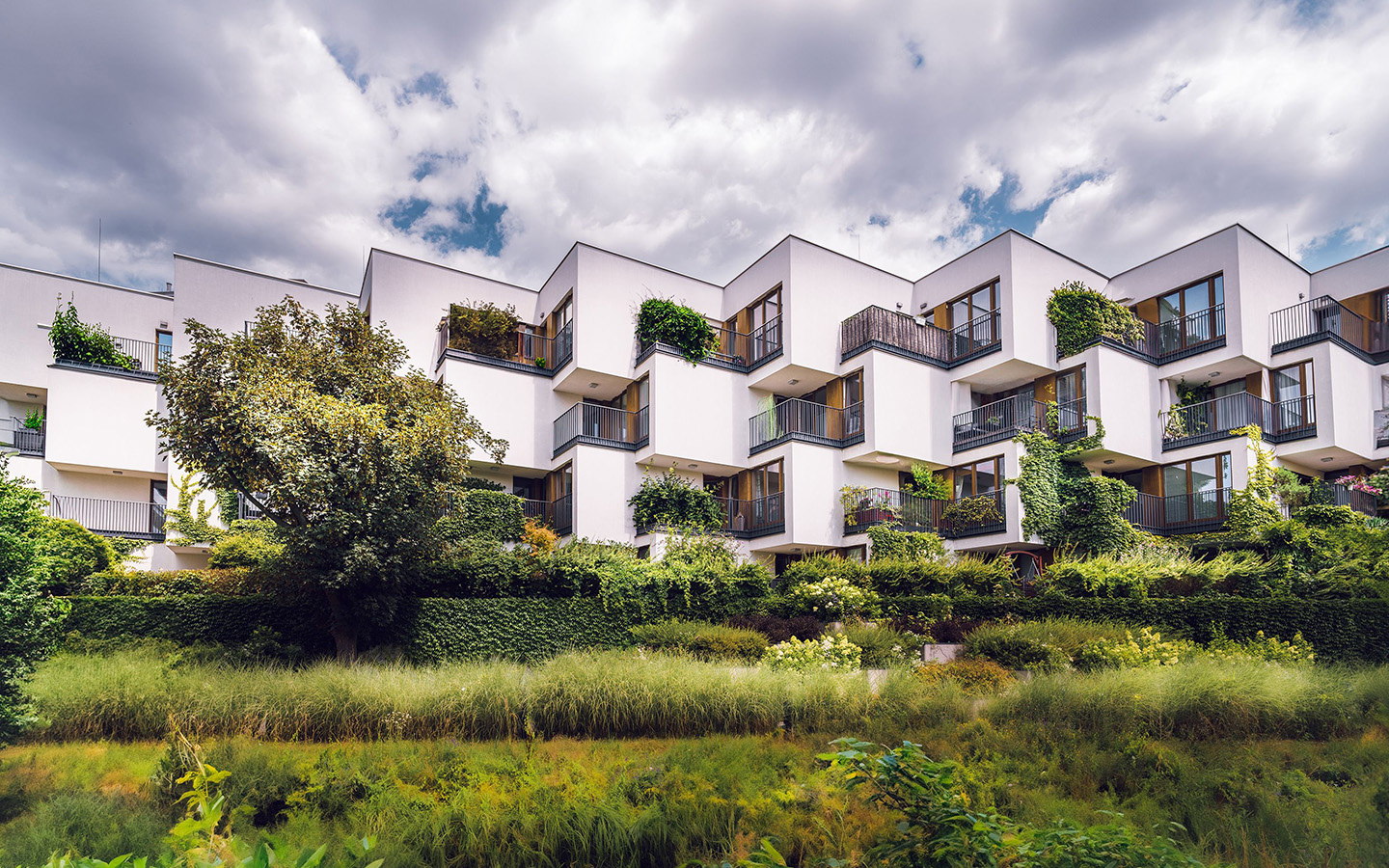
A real estate development that incorporates green spaces, a well-established tree canopy, and permeable surfaces may, under certain conditions, generate LBC carbon credits. These credits provide the developer with additional revenue, separate from sales proceeds.
Many French and European companies are actively seeking locally sourced, certified, and verifiable carbon credits for their carbon neutrality strategies. A developer offering LBC projects can form direct partnerships with these credit buyers.
A program bearing an official label from the Ministry of Ecological Transition benefits from marketing that sets it apart in the eyes of end buyers, who are increasingly concerned about environmental issues.
ZACs (Concerted Development Zones), eco-neighborhoods, and urban renewal projects that include significant green spaces (0.5 hectares or more) are the most suitable candidates for the LBC.
Projects to redevelop industrial or commercial brownfields—which transform paved surfaces into partially green spaces—generate carbon sequestration benefits calculated based on the bare ground or brownfield as the baseline.
Housing developments that meet the RE2020 requirements for green spaces and biodiversity may qualify for the LBC if their green areas and tree cover are sufficiently extensive.
To initiate an LBC process, the developer must have accurate data on:
This data must be generated using a methodology that is acceptable to the auditor, which excludes mere visual estimates.
Analysis of high-resolution aerial images makes it possible to:
The LBC must be incorporated from the project’s design phase, not after completion. Landscape design decisions (choice of plant species, green areas) must be guided by the label’s methodological requirements.
An audit conducted by an independent body involves significant costs. For smaller-scale projects, certification costs can equal or exceed the revenue generated by carbon credits. The LBC is applicable for projects exceeding a certain area (generally 1 to 2 hectares of actual vegetation).
The Low Carbon Label does not replace the regulatory carbon assessment required for certain projects. These are two distinct, complementary processes that are not interchangeable.
RE2020 sets requirements for embodied carbon (emissions associated with construction) and energy performance (operational carbon). LBC, on the other hand, emphasizes carbon sequestration and the reduction of emissions associated with green spaces.
The two initiatives complement each other: a developer who optimizes their RE2020 performance AND generates LBC credits has a comprehensive and distinctive environmental case.
The Low Carbon Label is not an end in itself for developers and planners: it is an additional financing tool and a means of differentiation that recognizes projects with ambitious renaturation goals. To take full advantage of it, it must be integrated from the planning stage onward, using the appropriate data and methods.
Netcarbon conducts the initial environmental assessment of your properties, which is essential for any Low Carbon Label initiative. Contact us to evaluate the potential of your next project.

.png)