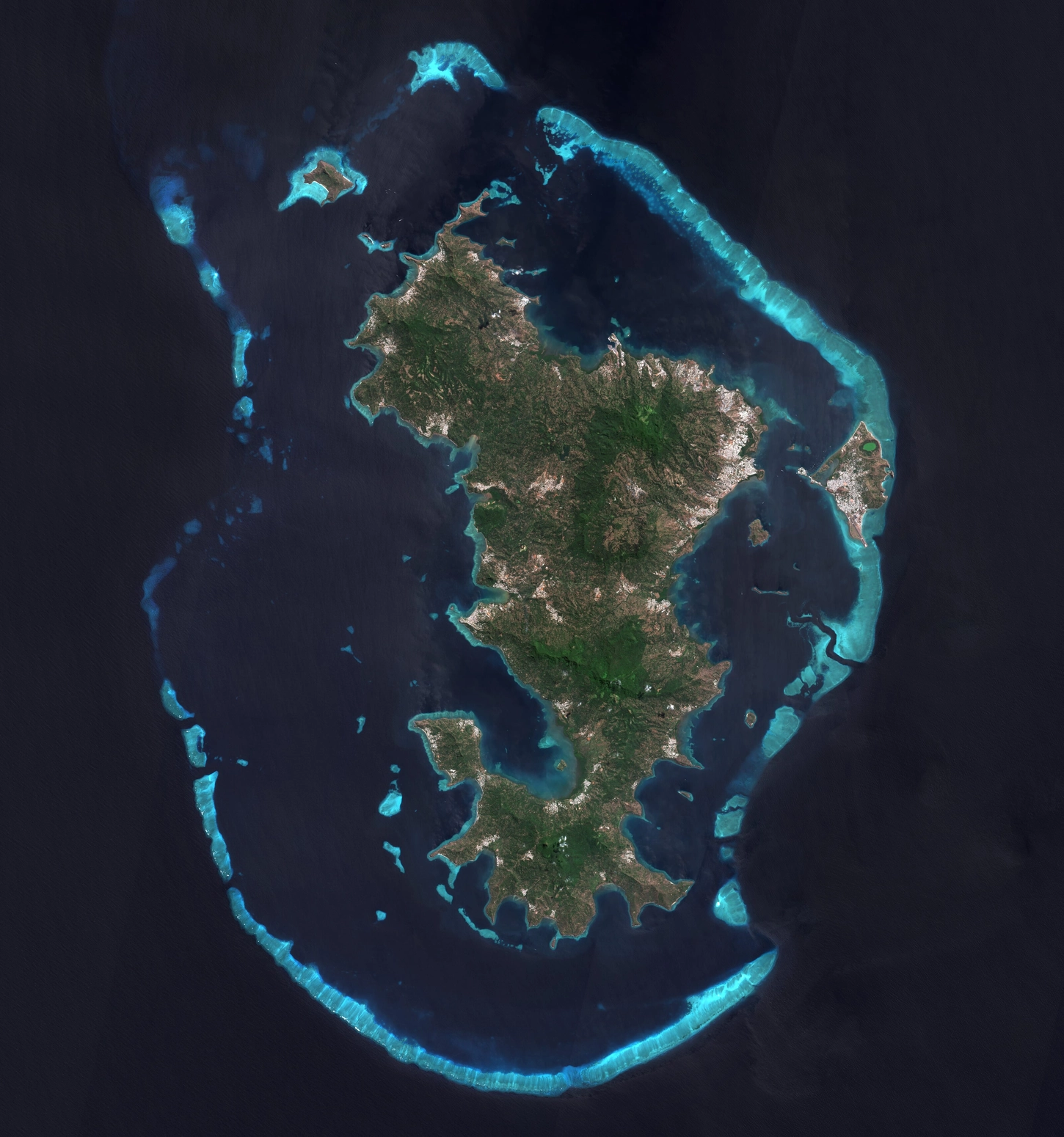
AL'MA est une filiale d’Action Logement dédiée à la mise en œuvre de projets d'urbanisation durable sur l'île de Mayotte. Face à une croissance démographique rapide et à des enjeux environnementaux de taille, les initiatives d’urbanisation actuelles mettent en danger les ressources naturelles de l’île et son écosystème fragile. Ainsi, AL’MA s'est engagé dans un projet ambitieux : la construction de l’écoquartier HOME FLOWER VILLAGE.
As the Group's flagship project, the eco-neighborhood responds to the need to design housing with minimal carbon impact. AL'MA's ambition is first and foremost to create housing, but also to be able to anchor its projects in a global dynamic of taking into account planetary limits, and integrating biodiversity and nature as essential elements of development.
This project is part of the RenovAIte initiative, supported by France and Germany, which focuses on the use of artificial intelligence to transform the way we renovate and build our infrastructures. Working with Netcarbon, AL'MA was able to mobilize a series of indicators to better assess the environmental impact of the HOME FLOWER VILLAGE project and identify the best solutions to guarantee its sustainability.
As a first step, Netcarbon carried out a survey of the site prior to development. Using a combination of satellite images and high-resolution ortho-photographs (20 cm), it was possible to extract key data used to form environmental indicators such as carbon stock and surface temperature.
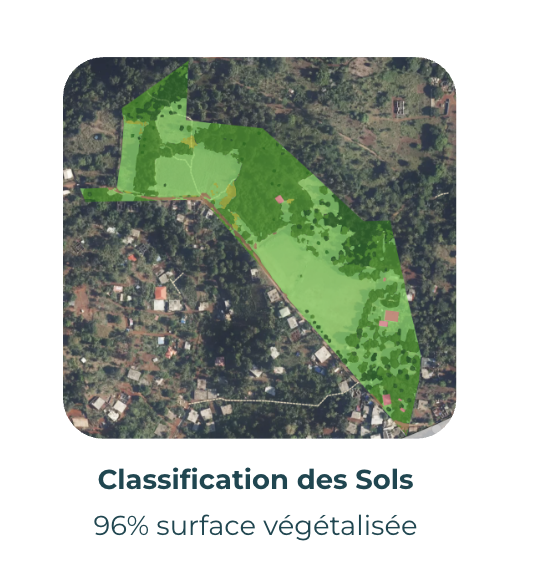
This approach enabled us to establish a detailed soil classification, distinguishing between vegetated areas, built-up areas and road infrastructures. These data were used to estimate carbon stocks and sequestration capacity, integrating above-ground, root and soil carbon biomass.
These analyses enabled Netcarbon to provide a solid diagnosis that served as the basis for modeling and simulating the impacts of the development project. This first step has made it possible to illustrate precisely the environmental issues to be addressed and to guide AL'MA's future decisions.
On the basis of the initial site survey, AL'MA's aim was to anticipate local environmental constraints and guide development choices with a view to preserving the ecological potential of a predominantly vegetated area. Impact modelling is used here to anticipate the need for adjustments.
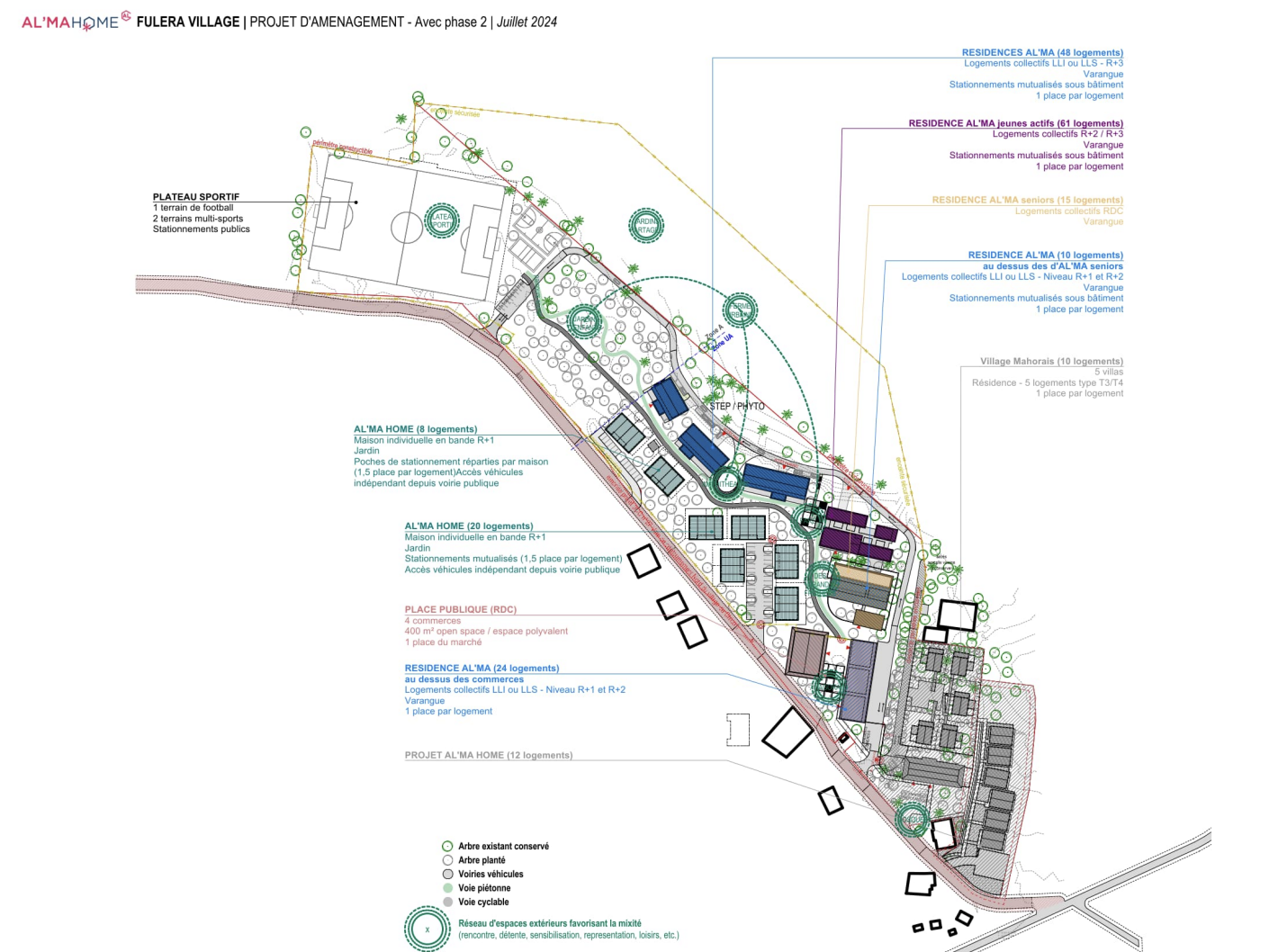
Netcarbon then modeled the development project supplied by AL'MA, integrating precise data on the building footprint, planted areas and, in particular, types of flooring.
This simulation enabled AL'MA to visualize the impact of its architectural and material choices on the environment. Vegetation types, tree species and the size of planned plantings were also taken into account to refine the projections.
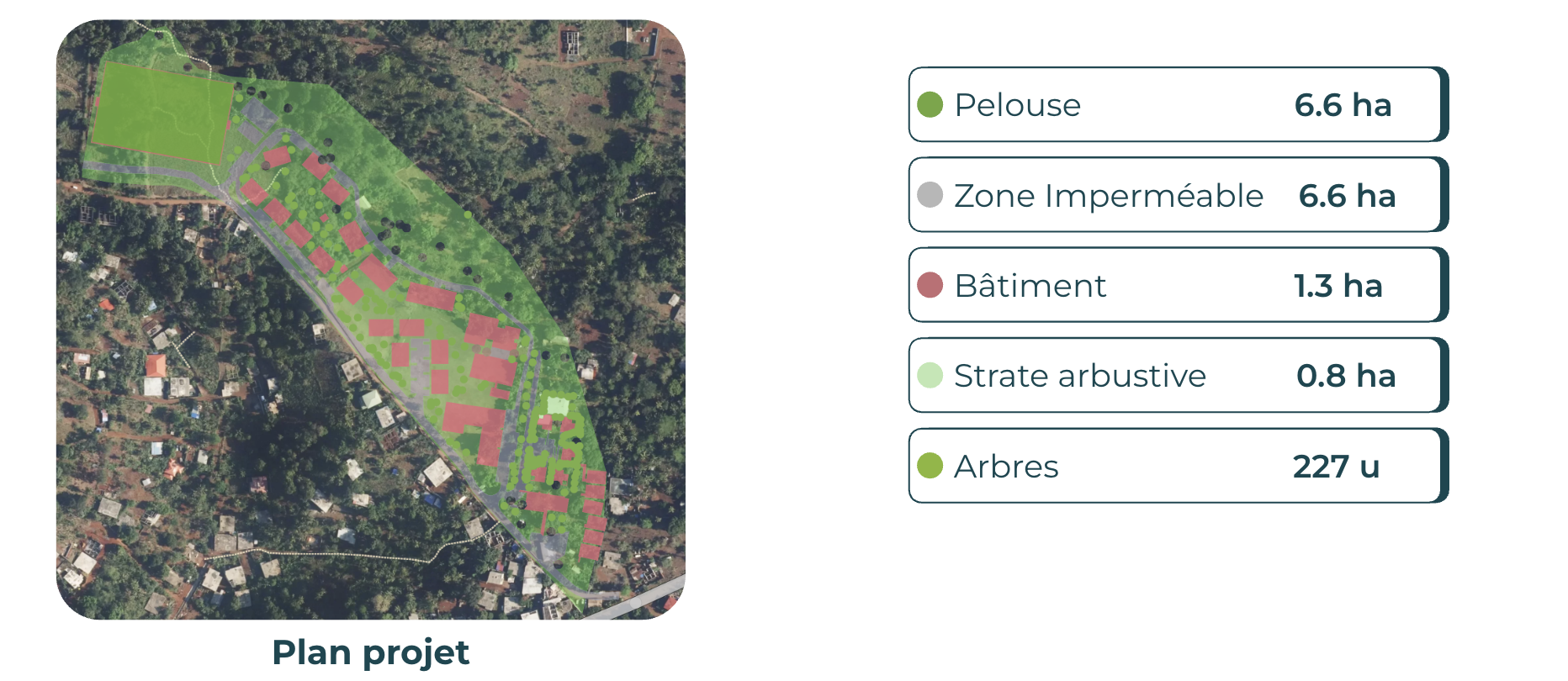
By integrating all these parameters, Netcarbon was able to provide a precise estimate of the expected benefits: increased carbon capture, reduction of heat islands and impact on biodiversity. These analyses thus helped predict the impact of building the eco-neighborhood in a previously largely undeveloped area.
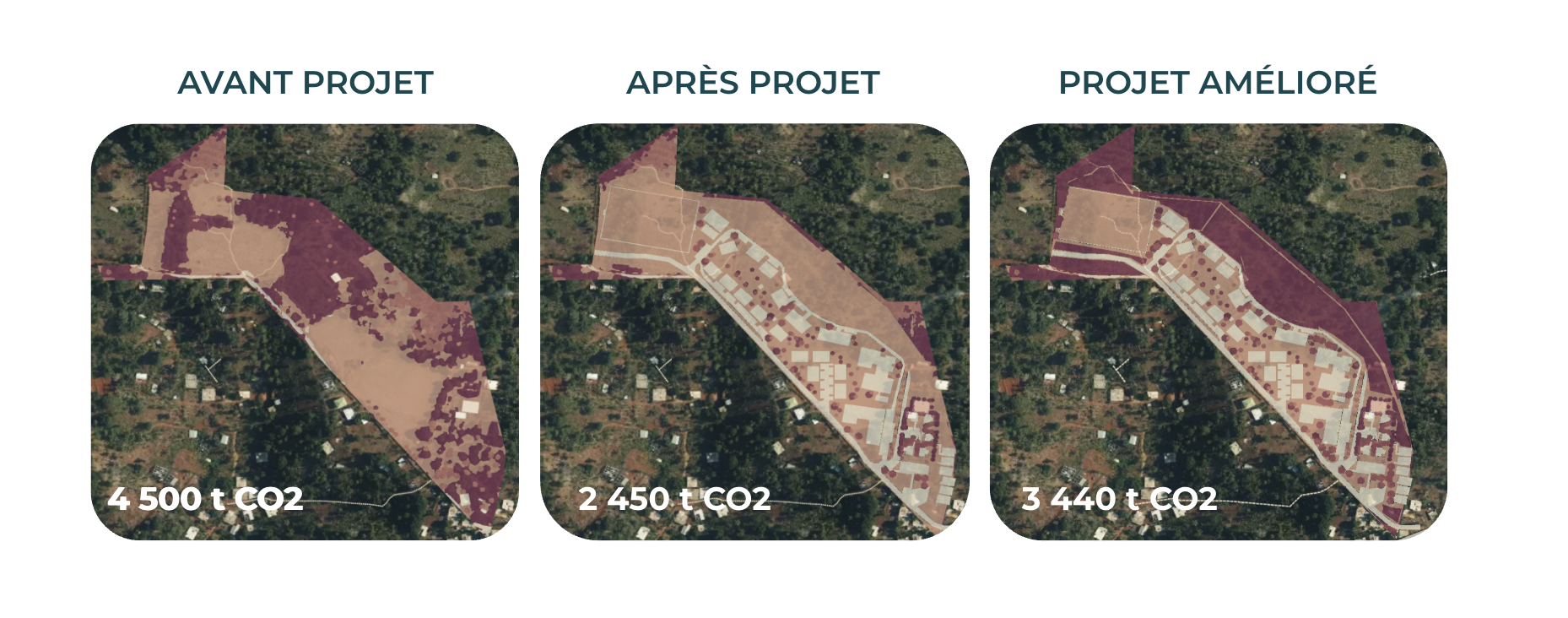
Thanks to the project simulation, Netcarbon was able to suggest areas for improvement, in particular identifying areas where vegetation could be reinforced. It was thus recommended to add 50 trees to the 227 initially planned, in order to compensate for the reduction in wooded area from 96% to 75%. This adaptation would limit the loss of carbon stock to 10% instead of 40% in the original version of the project.
Thermal analysis has revealed a slight increase in UHIs (Urban Heat Islands) in certain sensitive areas. However, planned planting will keep this increase to around +0.2°C, well below critical thresholds.
Netcarbon also quantified a drop in carbon stocks, from 3,900 to 2,450 tonnes, mainly due to the reduction in wooded areas. To limit this loss, strategic areas were identified for the planting of deciduous trees, reducing the loss of carbon stock by around 1,000 t CO₂ compared with the initial version.
Sur la base de cette analyse fine et des recommandations apportées par Netcarbon, AL’MA a pu optimiser son projet en intégrant une meilleure gestion des sols et du couvert végétal en s’appuyant sur des données concrètes.
With Netcarbon's support, AL'MA was able to realize its environmental ambitions in a measurable way. This collaboration played a key role in consolidating the environmental credibility of the HOME FLOWER VILLAGE project. Using precise analyses and advanced modelling, AL'MA was able to demonstrate its commitment to sustainable, transparent urban planning.
As a result, the project's environmental impact has been reduced, while anticipating long-term benefits for biodiversity and climate comfort. By incorporating these results into its communications, AL'MA can also reinforce its image as a responsible and innovative player, while consolidating its CSR approach.
The Netcarbon application played a central role in data sharing and project optimization. This tool made it possible to centralize and analyze all the data collected, from initial diagnostics to prospective simulations, in a systematic way.
By testing several greening and land management scenarios on the application, AL'MA was able to adjust its project in favor of an optimal balance between access to housing for the population and ecological preservation.
The environmental impact of a project does not stop at the design stage. With this in mind, AL'MA has integrated a continuous improvement approach to measure and optimize the project's impact on the environment.
The AL'MA HOME FLOWER VILLAGE project embodies a new generation of sustainable urban development, in which scientific data guides every decision for responsive, responsible urban planning. Thanks to Netcarbon's expertise, AL'MA has succeeded in reconciling development and environmental preservation, offering residents a balanced and resilient living environment.
This case demonstrates that thoughtful urbanization can coexist with nature, and that by integrating innovative tools, it is possible to optimize each project to meet today's climatic challenges. AL'MA has thus positioned itself as a pioneering player in sustainable development in Mayotte, inspiring other similar initiatives across the territory.

.png)