depaving Parking lots and industrial sites: how Infrastructure operators are reducing their land footprint

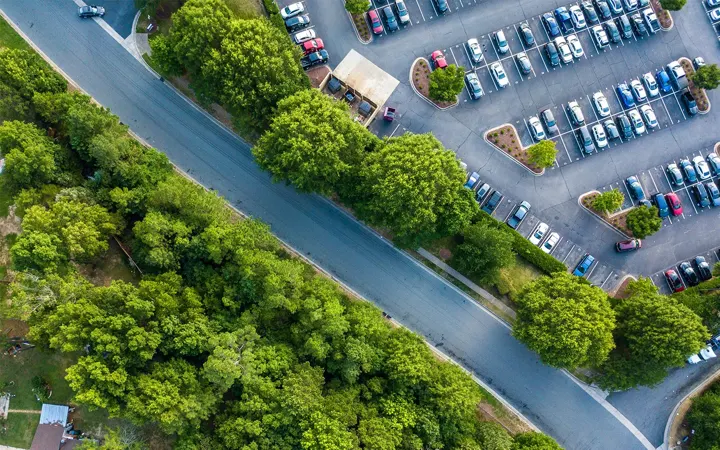
Airport, highway, and logistics zone operators manage some of the largest paved areas in France. A regional airport covers 200 to 500 hectares, a significant portion of which consists of parking lots, roadways, and service areas—expanses of asphalt that overheat, cause runoff, and sequester no CO2.
This reality is undergoing a transformation: from a functional legacy that was simply accepted, it is becoming an explicit CSR issue and an opportunity to demonstrate the organization’s environmental commitment.
Pourquoi la désimperméabilisation devient un enjeu stratégique pour les infrastructures
Regulations require action
- ZAN : même les opérateurs d'infrastructures existantes sont concernés par l'objectif de limitation de l'artificialisation.
- European Taxonomy: The goal of protecting and restoring biodiversity requires a net positive contribution.
- Net positive biodiversity: an increasing number of tenders and concessions require a commitment to "no net loss" of biodiversity.
- CSRD: Large companies will be required to report on their impact on soil and ecosystems.
Considerable potential
Parking lots often account for 20 to 40 percent of an airport’s total area. On a 300-hectare site, this represents 60 to 120 hectares of land that could potentially be converted to permeable surfaces—without compromising parking capacity.
Technical solutions for large right-of-way areas
Permeable pavements and honeycomb pavers
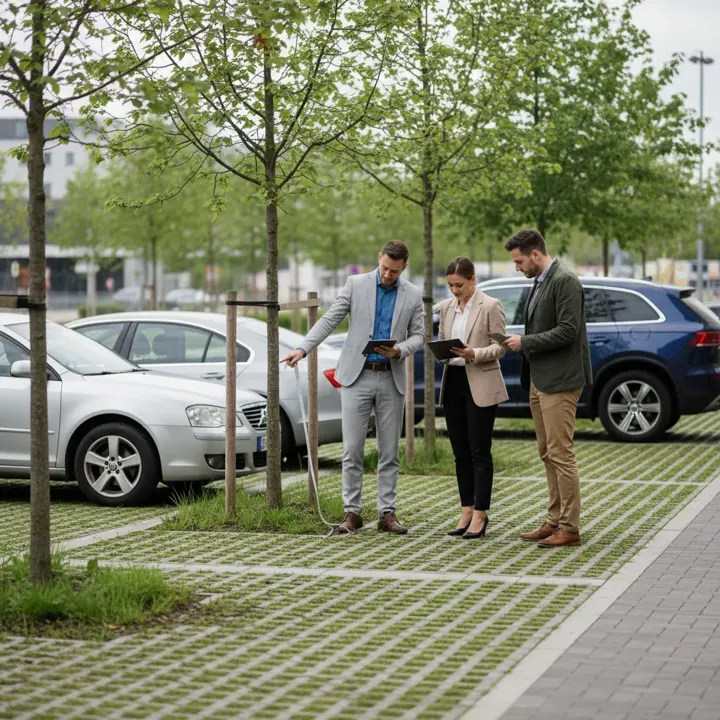
Pour les parkings à faible contrainte de circulation lourde, les revêtements perméables (graviers stabilisés, enrobés drainants, dalles gazon) permettent de maintenir la fonctionnalité tout en permettant l'infiltration. L'impact thermique est significatif : un revêtement perméable avec végétation basse peut réduire la température de surface de 3 à 8°C.
Planting islands and tree canopy
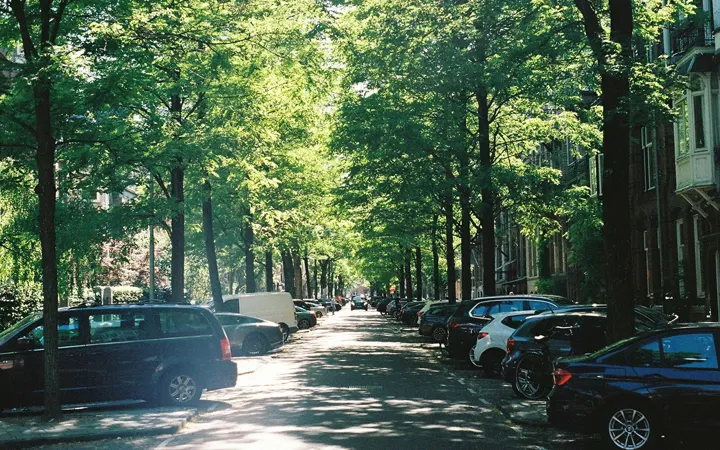
L'intégration d'îlots plantés dans les parkings combine désimperméabilisation et réduction thermique. Un arbre adulte à bonne canopée peut rafraîchir jusqu'à 50 m² de surface en été par évapotranspiration.
Photovoltaic shade structures with ground-level vegetation
The combination of solar shade structures and ground-level vegetation helps reduce soil sealing while generating energy. This offers a twofold economic benefit: electricity generation and carbon credits generated by the vegetation.
Simulation for Optimization: The Case of Airports
Aéroport Nantes Atlantique : Netcarbon a simulé un projet de renaturation d'un parking de 29 ha avec ombrières photovoltaïques. Résultats à 25 ans : -6,3°C, +784,8 tCO2, +4,4 ha désimperméabilisés.
Aéroport de Lyon : simulation de végétalisation avec 100 arbres → -1,76°C, +17 tCO2, CBSh +0,2. Une intervention plus modeste, mais dont l'impact est documenté et valorisable dans le rapport RSE.
Désimperméabilisation et compensation carbone : un levier financier
Les espaces désimperméabilisés et revégétalisés peuvent générer des crédits carbone via le Label Bas Carbone. Pour un opérateur gérant plusieurs dizaines d'hectares de parkings végétalisables, le potentiel de séquestration peut représenter plusieurs milliers de tonnes de CO2 — des dizaines à centaines de milliers d'euros de crédits valorisables.
C'est un argument financier qui transforme la désimperméabilisation d'un coût en investissement à rentabilité calculable.
Conclusion
Les emprises d'infrastructure sont souvent perçues comme des contraintes figées. En réalité, elles représentent un gisement de renaturation considérable, exploitable sans remettre en cause l'activité principale. La désimperméabilisation des parkings et zones périphériques est l'une des interventions les plus rentables pour les opérateurs qui souhaitent démontrer leur engagement en faveur de la biodiversité et du climat.