AL’MA x Netcarbon : Optimizing the Design of an Eco-Neighborhood in Mayotte
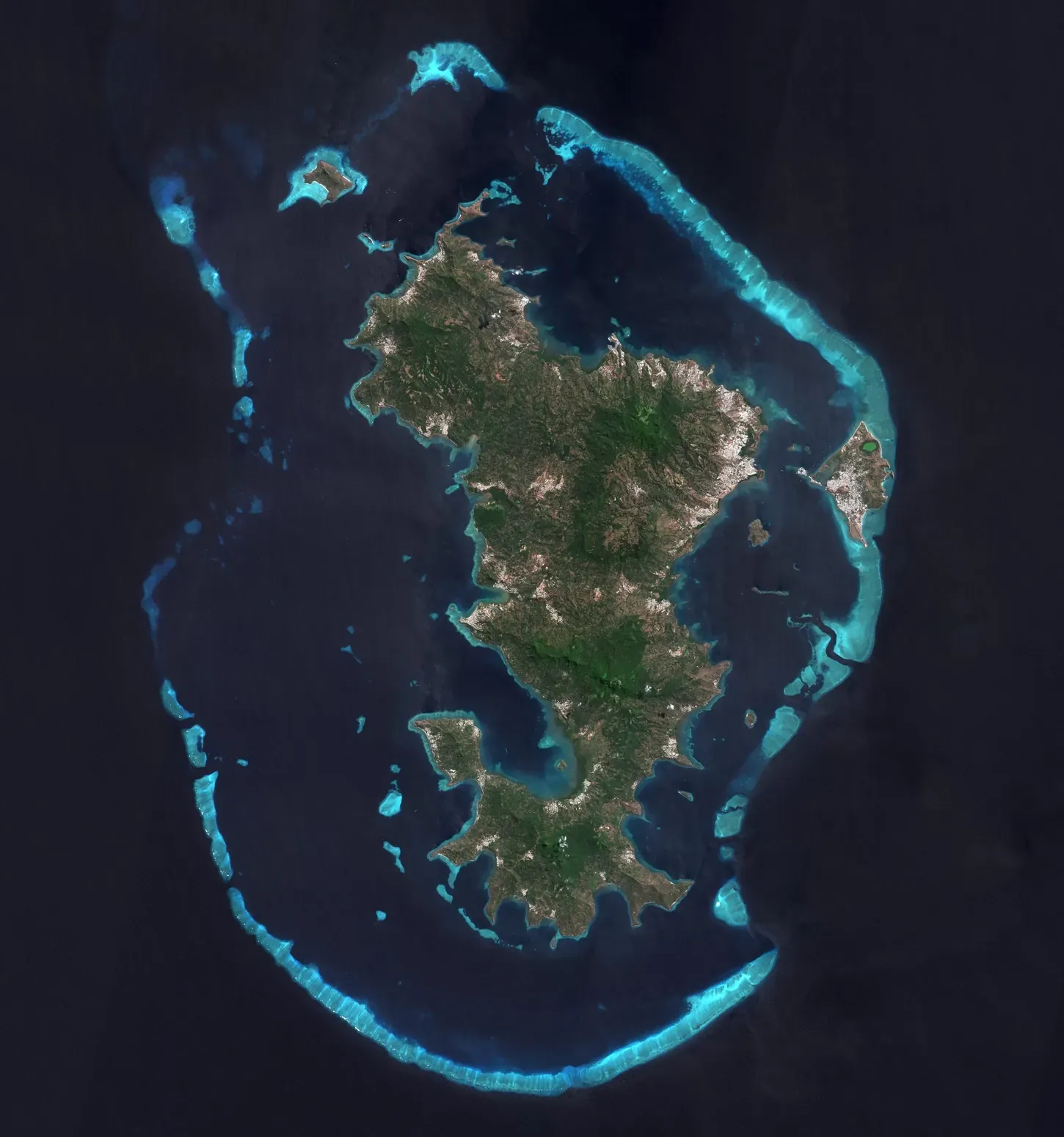
AL'MA is a subsidiary of Action Logement dedicated to implementing sustainable urban development projects on the island of Mayotte. Faced with rapid population growth and significant environmental challenges, current urban development initiatives are endangering the island’s natural resources and its fragile ecosystem. As a result, AL’MA has embarked on an ambitious project: the construction of the HOME FLOWER VILLAGE eco-neighborhood.
As the Group's flagship project, the eco-neighborhood responds to the need to design housing with minimal carbon impact. AL'MA's ambition is first and foremost to create housing, but also to be able to anchor its projects in a global dynamic of taking into account planetary limits, and integrating biodiversity and nature as essential elements of development.
This project is part of the RenovAIte initiative, led by France and Germany, which focuses on using artificial intelligence to transform the way we renovate and build our Infrastructure operators. By collaborating with Netcarbon, AL'MA was able to utilize a set of indicators to better assess the environmental impact of the HOME FLOWER VILLAGE project and identify the best solutions to ensure its sustainability.
An Accurate Environmental Assessment Thanks to Netcarbon
A comprehensive pre-project " baseline assessment "
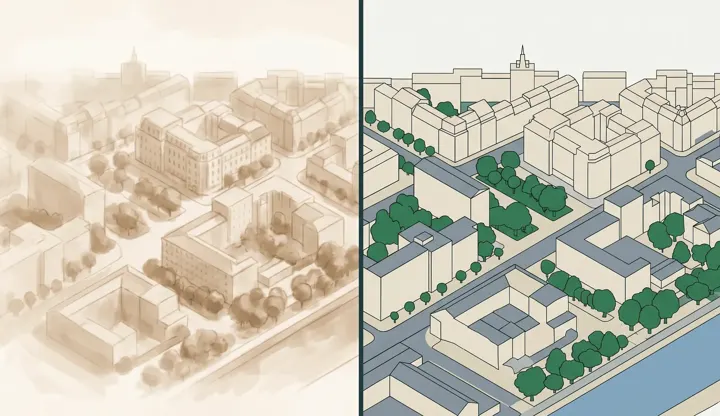
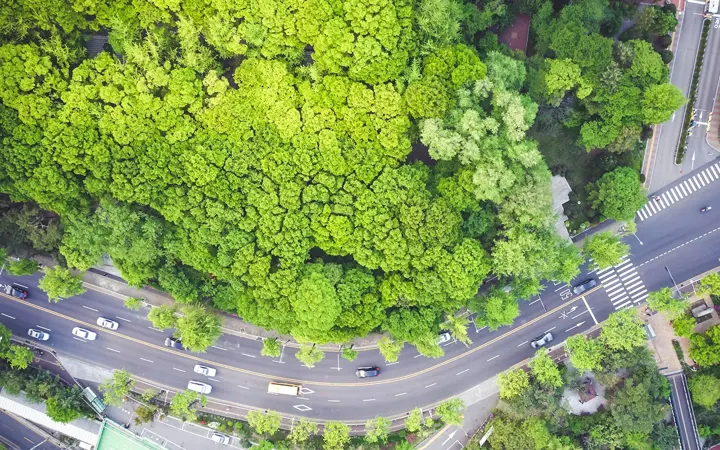
Initially, Netcarbon conducted a site- baseline assessment ation prior to development. Using a combination of satellite imagery and high-resolution orthophotos (20 cm), it was possible to extract key data used to generate environmental indicators such as carbon stock and surface temperature.
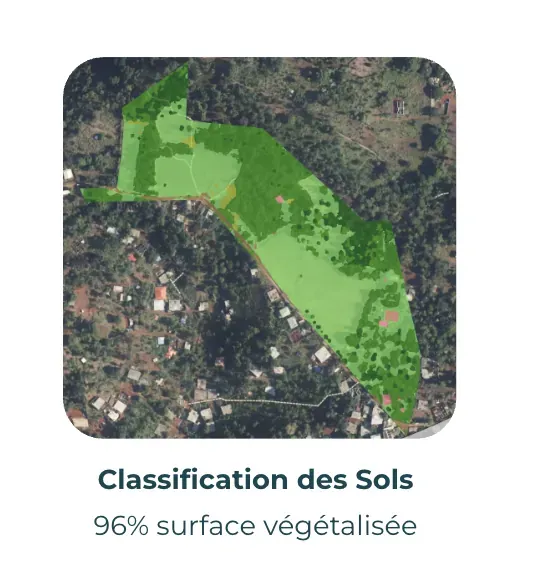
This approach made it possible to establish a detailed soil classification, distinguishing between vegetated areas, built-up areas, and road Infrastructure operators . Based on these data, an estimate of carbon stocks and their sequestration capacity was conducted, taking into account above-ground biomass, root biomass, and soil carbon.
These analyses enabled Netcarbon to provide a solid assessment that served as the basis for modeling and simulating the impacts of the development project. This initial step made it possible to clearly identify the environmental challenges that needed to be addressed and to guide AL’MA’s future decisions.
From analysis to project modeling
Based on the initial “baseline assessment ,” AL’MA’s goal was to anticipate local environmental constraints and guide planning decisions with a view to preserving the ecological potential of an area that is predominantly vegetated. Impact modeling allows us to anticipate the need for adjustments.
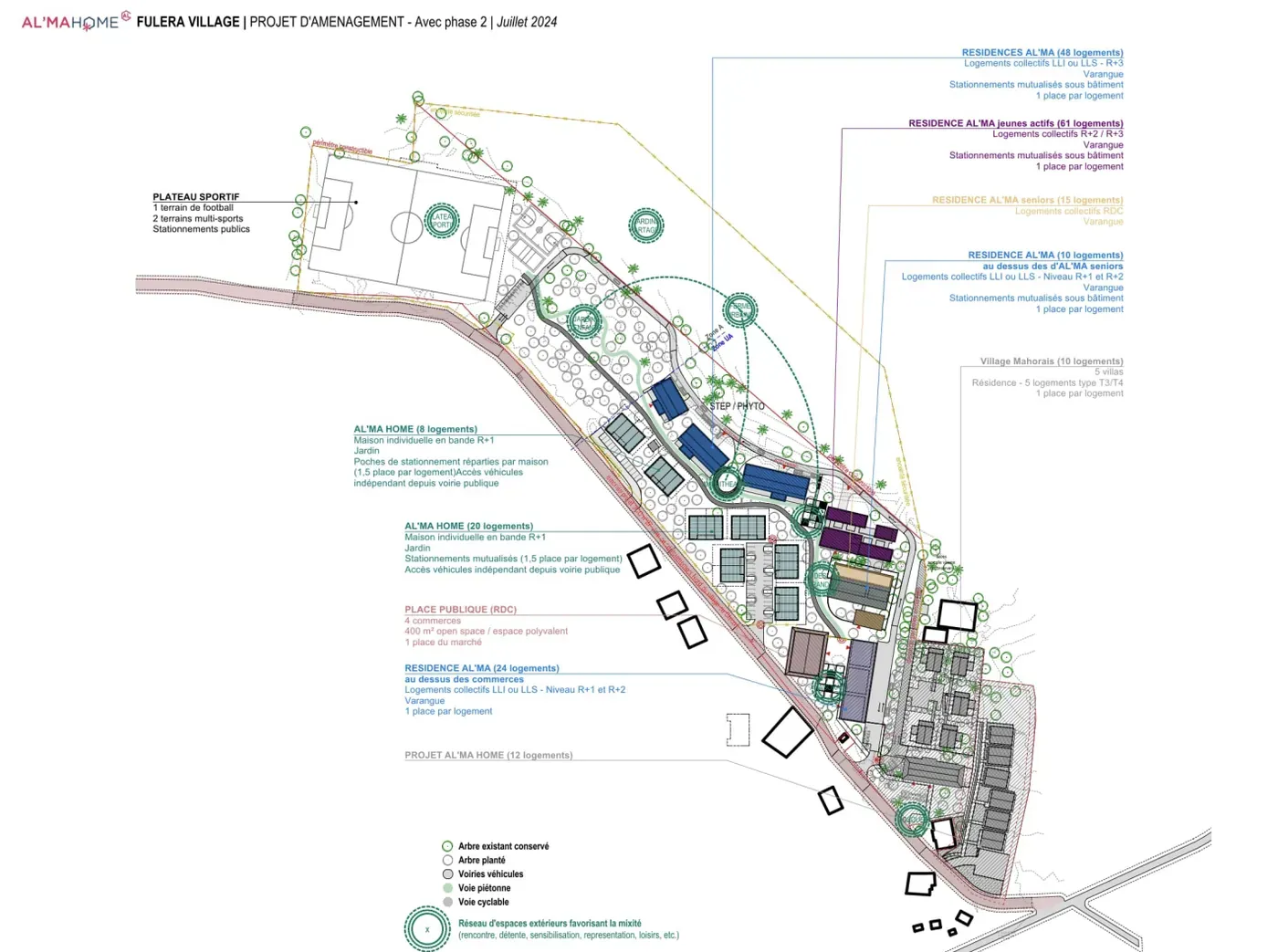
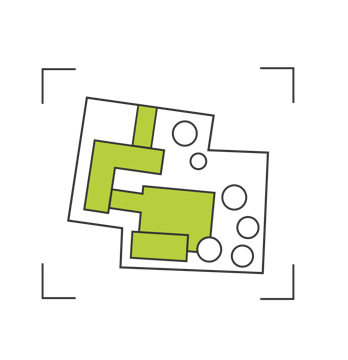
Netcarbon then modeled the development plan provided by AL’MA, incorporating precise data on the footprint of the planned buildings, green spaces, and, in particular, the types of paving materials.
This simulation enabled AL'MA to visualize the impact of its architectural and material choices on the environment. Vegetation types, tree species and the size of planned plantings were also taken into account to refine the projections.
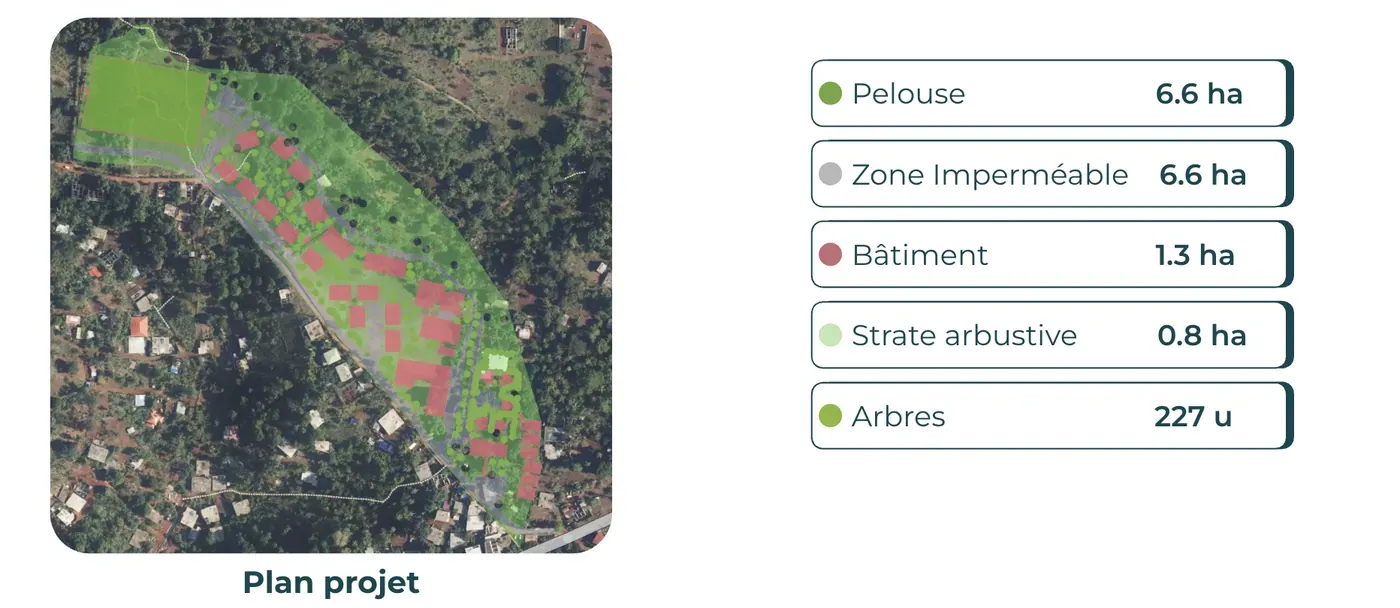
By taking all of these factors into account, Netcarbon was able to provide an accurate estimate of the expected benefits: increased carbon sequestration, reduced heat islands, and positive impacts on biodiversity. These analyses thus helped predict the impact of building the eco-neighborhood in an area that had previously been largely undeveloped.
A data-driven approach to ecological optimization
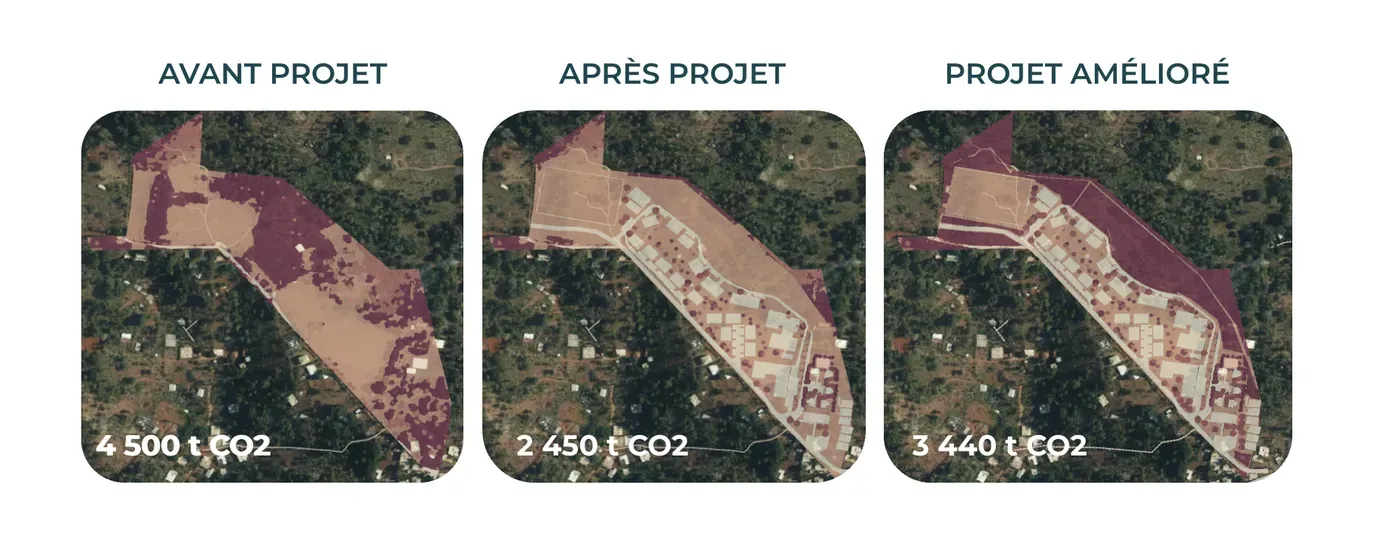
Through project simulation, Netcarbon was able to suggest ways to improve the project, specifically by identifying areas where vegetation needed to be increased. It was therefore recommended to add 50 trees to the 227 originally planned, in order to offset the reduction in forested area from 96% to 75%. This adjustment would limit the loss of carbon stock to 10% instead of 40% in the original version of the project.
Thermal analysis has revealed a slight increase in UHIs (Urban Heat Islands) in certain sensitive areas. However, planned planting will keep this increase to around +0.2°C, well below critical thresholds.
Netcarbon It also quantified a decline in carbon stocks, from 3,900 to 2,450 metric tons, primarily due to a decrease in forested areas. To limit this loss, strategic areas were identified for planting deciduous trees, thereby reducing the loss of carbon stocks by approximately 1,000 metric tons of CO₂ compared to the initial version.
Based on this detailed analysis and the recommendations provided by Netcarbon, AL’MA was able to optimize its project by incorporating improved soil and vegetation management based on concrete data.
Reinforcing the project's environmental credibility and continuous improvement
Informed decisions to improve upstream projects
With the support of Netcarbon, AL'MA was able to achieve its environmental goals in a measurable way. This collaboration played a key role in strengthening the environmental credibility of the HOME FLOWER VILLAGE project. By drawing on precise analyses and advanced modeling, AL'MA was able to demonstrate its commitment to sustainable and transparent urban planning.
As a result, the project's environmental impact has been reduced, while anticipating long-term benefits for biodiversity and climate comfort. By incorporating these results into its communications, AL'MA can also reinforce its image as a responsible and innovative player, while consolidating its CSR approach.
The " Netcarbon " App: Toward a Dynamic and Evolving Approach
Throughout this process, the Netcarbon app played a central role in data sharing and project optimization. This tool made it possible to systematically centralize and analyze all the data collected, from initial assessments to forward-looking simulations.
By testing several greening and land management scenarios on the application, AL'MA was able to adjust its project in favor of an optimal balance between access to housing for the population and ecological preservation.
The environmental impact of a project does not stop at the design stage. With this in mind, AL'MA has integrated a continuous improvement approach to measure and optimize the project's impact on the environment.
Conclusion: an exemplary project for the future of development
The AL'MA HOME FLOWER VILLAGE project embodies a new generation of sustainable urban developments, in which scientific data guides every decision to ensure responsive and responsible urban planning. Thanks to the expertise of Netcarbon, AL'MA has successfully balanced development with environmental conservation, thereby offering residents a balanced and resilient living environment.
This case demonstrates that thoughtful urbanization can coexist with nature, and that by integrating innovative tools, it is possible to optimize each project to meet today's climatic challenges. AL'MA has thus positioned itself as a pioneering player in sustainable development in Mayotte, inspiring other similar initiatives across the territory.