Label Bas Carbone (French low-carbon label) and social housing providers: promoting the greening of their housing stock
Lenders Face Dual Pressure: Sustainability and Reporting
Social housing providers and real estate investment firms face a dual challenge: making their portfolios more sustainable to meet regulatory requirements (eco-conditionalities, CSRD, European Green Taxonomy) and reducing their costs amid a tight financial environment.
The "Label Bas Carbone (French low-carbon label) " (LBC) offers a partial but tangible solution to this challenge: transforming asset greening initiatives into a source of carbon revenue while highlighting their value in non-financial reporting.
Which cultural heritage sites are affected?
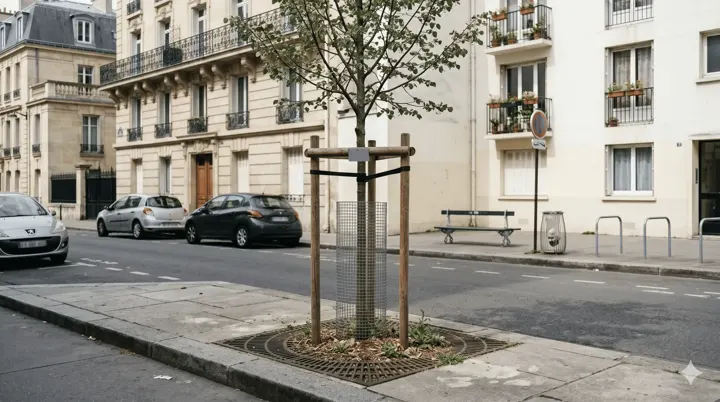
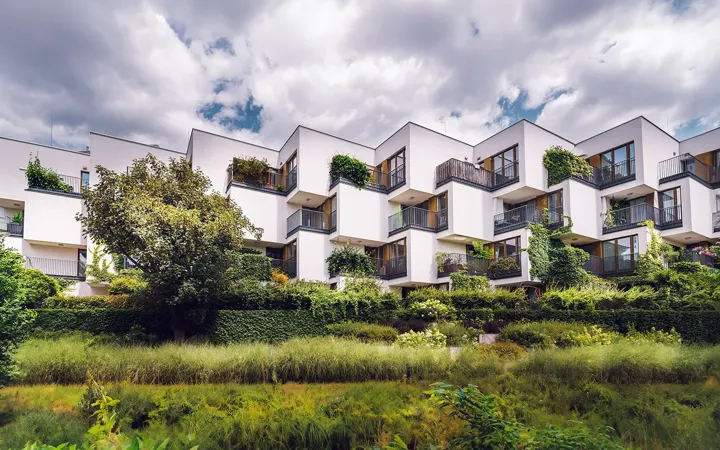
Public housing organizations and real estate companies manage a variety of real estate assets, many of which have significant potential for restoration:
- Courtyards and outdoor areas of residential complexes: often 60–90% paved with asphalt, they can be partially de-impermeabilized and landscaped
- Parking Lots: Outdoor parking lots can be converted into permeable, green parking lots
- Roofs: Flat roofs allow for the creation of rooftop gardens or green roofs
- Neglected Areas: Neglected lots and the areas around building foundations can be used for green spaces
How does LBC fit into landlords' ESG strategies?
CSRD and Non-Financial Reporting
The CSRD Directive, which will be phased in starting in 2024, requires large companies to provide detailed non-financial reporting in accordance with ESRS standards. The LBC provides standardized and audited data that fits seamlessly into these reports: the metric tons of CO₂ sequestered or avoided through greening initiatives are metrics that can be used directly.
The European Green Taxonomy
The European taxonomy classifies economic activities based on their contribution to the EU’s climate and environmental objectives. Heritage greening initiatives contribute to two objectives: climate change mitigation and biodiversity conservation.
The LBC Method for Landlords: Practical Steps
Asset Inventory
The first step is a systematic survey of the park’s outdoor areas: total area, average imperviousness rate, and type of surfaces (asphalt, concrete, bare soil). This survey can be conducted on a large scale by analyzing aerial imagery, without the need for a systematic field inspection.
Site Prioritization
Once the inventory has been completed, the next step is to prioritize the sites based on their potential for restoration, their strategic importance (location, level of exposure to ICUs), and their technical feasibility.
Design, Implementation, and Audit
depaving , and greening projects must be documented in detail to enable the quantification of carbon credits. An accredited verification body then verifies compliance with the methodology and validates the quantifications. The credits are then registered in the LBC registry.
What Carbon Revenue Can a Social Housing Landlord Expect?
A public housing organization managing 5,000 housing units typically has 10 to 30 hectares of outdoor space. An ambitious renaturation program (50% of surfaces left unsealed and planted with vegetation) could sequester between 500 and 2,000 metric tons of CO₂ over 20 years, representing between €12,500 and €90,000 in carbon credits at current market prices.
These amounts do not cover investment costs, but rather serve as supplemental financing and contribute to the value of the assets.
LBC, one of several tools in the landlord's CSR strategy
Label Bas Carbone (French low-carbon label) is part of a broader CSR strategy that also includes: energy-efficient building retrofits, renewable energy, sustainable mobility for tenants, and biodiversity. It is the synergy with these other initiatives—and its ability to generate standardized metrics for CSRD reporting—that makes it attractive to landlords.